Showing posts with label 10 months. Show all posts

Thursday, April 26, 2012

10 Months Old

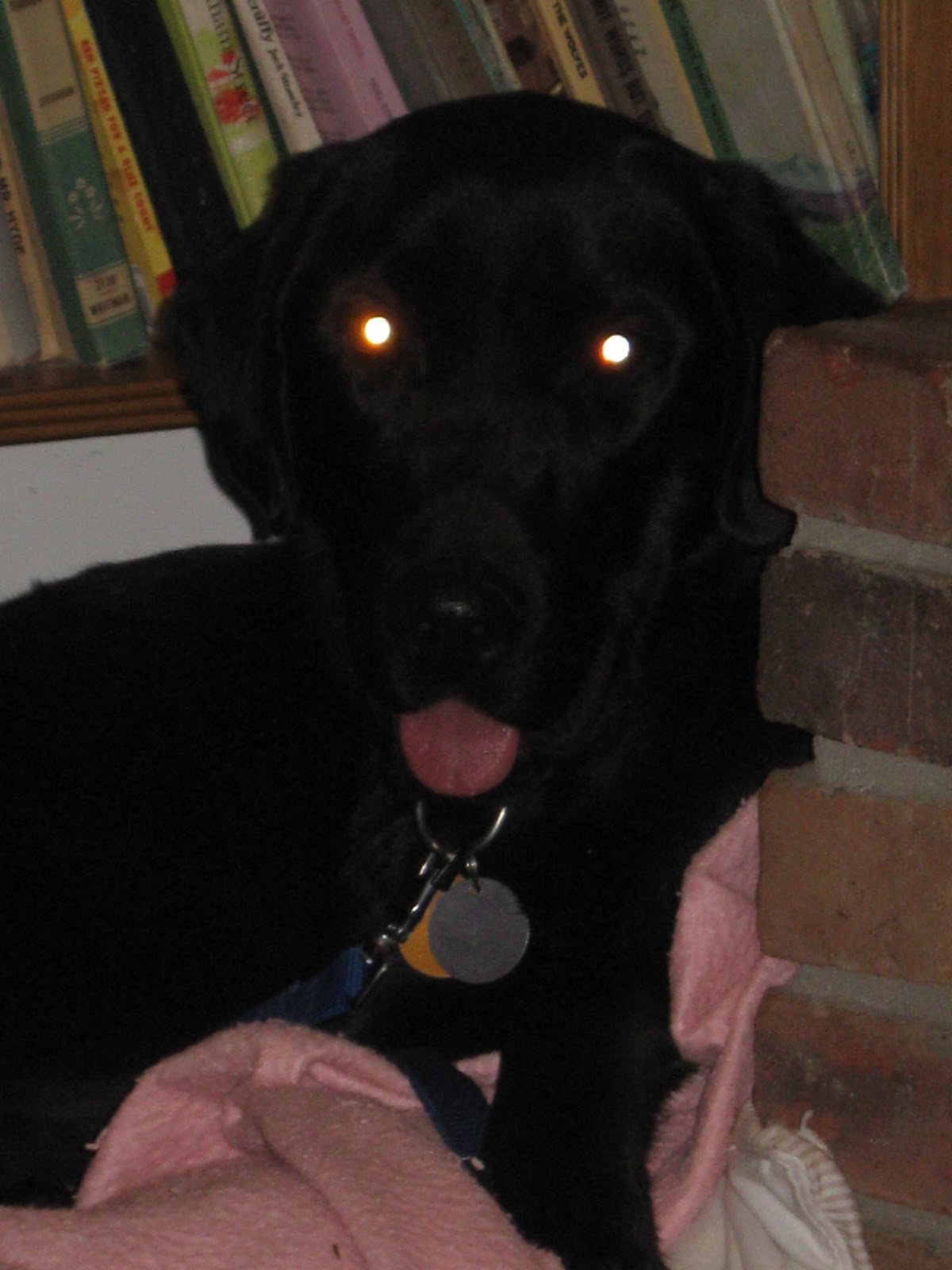
Hobart turned 10 months old on Tuesday! He's growing up so fast! This month I'm sick of saying things that always are just reworded versions of the last months "month for month" post. So I'm going to briefly give 10 things that Hobart needs to improve on!

  1. long stay commands... Hobart prefers to be free... but if he's at my feet then he won't budge.
  2. less excitement when coming... Hobart loves to come bounding up when called to me... not always a good thing! 
  3. elevators... Hobart recently decided that he's not a fan.
  4. jump.... Hobart isn't thrilled to have to jump onto things... but he's getting better.
  5. side... Hobart isn't great about switching to the "side" command.
  6. calmer off leash greetings
  7. better unders... he's good, but not perfect.
  8. posing for pictures... it's pretty dumb, but amusing. When a camera comes out... his head goes down!
  9. leash perfection... never pulling or getting tangled up.
  10. I can't think of a tenth one.... he's too good!
~Elijah & Hobart II

Monday, February 28, 2011

Blog Award!

Hi All,
Dembre & I received this blog award from Erin & Rob ! Thanks so much!
I am now going to pass it on to a couple of you! I am awarding two puppy raiser blogs and two just for fun blogs.
For puppy raiser blogs! I am giving this "Awesome Blog Award" to:

Ansel at Ansel: The Life and Times of a CCI Puppy.
&
 Lisa & Hosta at In Training.

Both blogs are very creative, interesting, and fun.

Now for the just for fun blogs! I'm passing this award on to:

Jenn at Unoriginal Originality
&
Madison at New Miracles

You both have very interesting ideas and are excellent writers! We enjoy reading about your adventures!

To all you who received this award you can copy the award and put on the side of your blog and pass this award on to more "Awesome" blogs.

~Elijah & Dembre
P.S. I hope you enjoyed my dog psychology posts. More may follow at some time! 

Saturday, February 26, 2011

Dog Behavior Part 4: Putting it Together & Questions to Answer on Your Own

In last three posts I have talked about counter conditioning. In post number two I discussed reinforcement-- a category of  counter conditioning. In the last post I went in depth on punishment-- another category of counter conditioning. Both of the categories of counter conditioning have sub-categories known as positives and negatives. We also discussed using aversive stimuli & appetitive stimuli to shape a desired response. I talked about classical conditioning- the linking of an unconditioned stimulus and a conditioned stimulus which results in a psychological response. Today I'd like to talk more about these subjects in basic dog training scenarios.

  • You are a novice dog trainer. You are teaching your 9 week old puppy to sit on command. (In this scenario we will call the puppy Rover). You put a leash on Rover and walk him to a quiet, low distraction room in your house. You can use an appetitive stimulus (treat) to lure the dog into the sit position. When Rover sits you mark the behavior with "good dog" and immediately give him the treat. You could also pull up on his leash until he sits down and then remove the leash pulling, which is the aversive stimulus. What type of reinforcement are you using when you mark the behavior with the treat??? What type of reinforcement are you using when you stop pulling on the leash when the Rover sits??? If you have read the last posts you can probably answer those questions for yourself.
  • Your dog is an excited greeter and when you come home for work she practically knocks you over with excitement. (we will call the dog Lily.) Though Lily doesn't jump on you she zooms around your legs and gets in your way. You have an elderly mother who comes to visit often and you're afraid that Lily will end up hurting her. What do you do? You could, number one, grab Lily by the collar and yank her into a sit position and say "NO!" every time she gets super excited or, number two, you could take your attention away from her and completely ignore her existence until she settles down and sits to get attention. Which one is more effective??? You tell me! Which one is an example of positive punishment and which one is an example of negative punishment??? Once again I'll leave that up to you. 
  •  Your dog is scared of his crate (once again we'll call him Rover). He has separation anxiety issues and dislikes his crate because you put him in it every time you leave for long periods of time. You want Rover to like the crate. You can put treats in the crate and wait for him to go in to the crate to get the treat. After lots of repetition of this process most dogs will begin to re-associate the crate with food. When crate training puppies I often give them a Kong stuffed with peanut butter to keep them occupied while I leave for awhile. That helps the puppy associate the crate with treats from the very beginning. You use _______ and ________ to help a fearful dog re-associate a fearful stimulus with an appetitive stimulus??? Also, note: If you want a crate-loving dog you should never put the puppy in the crate in anger. Sometimes when the puppy is giving a hard time you can put him in his crate, but don't shove him in slam the door and leave. He will begin associating the crate with anger and punishment. The crate is not a prison, it's a dog's best friend. 
  • You have taught your dog to sit on command in a quiet room at home. He always listens to you in that room. You are sure that he is proficient at this command so you decide to take him to the dog park to practice "sit". You let your dog off leash at the dog park and tell him to sit. He ignores you and runs towards another dog. What do you do and why did your dog disobey? There are a couple answers to this. Your dog has been taught to sit in a quiet room and has never practiced in a high distraction setting. He most likely assumes that when you say "sit" in a quiet room he must obey, but when you say "sit" anywhere else it means nothing. This is because the dog has not been proofed. Dogs don't generalize well and must be taught to obey and pay attention to you in all situations. Puppy raisers proof their dogs by taking them in public. At home a dog may seem perfect, but when placed in a stressful situation he may not listen. A dog is only proficient at a command when he listens consistently even when in a distracting setting. Service dogs have to learn that they obey and serve no matter where they are. 
Patience is a key to dog training! Dogs aren't humans and get confused when you are happy one minute and angry the next. In order to get a well behaved companion you need to be consistent, kind, and effective. Using a mix of positive & negative punishment depending on the situation is necessary. Your signals must be clear!

Hope this was interesting, helpful, and enlightening,

Elijah & Dembre

    Friday, February 25, 2011

    Dog Behavior Part 3: Punishment

    Please note: I am not an expert on this subject. As noted by readers of my last post I defined classical conditioning incorrectly. Many of you are more experienced in the field of animal psychology than I am so feel free to correct my views. I hope that you enjoy these posts.

     Last time I went in depth on reinforcement. Today I'm going to focus on punishment. What do you first think of when you hear the word punishment. I think of some terrible consequence for wrong doing. Punishment is often associated with pain and hardship. Punishment is not necessarily terrible! Punishment is anything that decreases the likeliness that a behavior will occur again. To decrease the likeliness that a behavior will be repeated you can add an aversive stimulus (something unwanted) or remove an appetitive stimulus (something wanted). When you remove something that a dog wants it's called negative punishment. When you add something that a dog dislikes it's called positive punishment. I'm going to give an example and then resolve it using both positive and negative punishment. Let's say that you come home from work and your dog jumps up on you. If your dog is a full sized 70 pound lab you probably don't want him jumping. You can correct this behavior in a lot of different ways, but I'm going to give two examples. Number one you can take away what your dog wants (your attention) and ignore him until he settles down or, number two, you give a voice correction and push or knee the dog off. Some dog trainers like Sophia Yin and Patricia McConnell say that it is most affective to train a dog that instead of jumping on you he should sit calmly to get attention. As far as I know this is an example of counter conditioning. So here are your choices: take your attention away from the dog, vocally & physically correct the dog, or train your dog that instead of jumping he needs to sit to get attention.

    I'm first going to discuss taking your attention away from the dog. When your dog jumps you remove the appetitive stimulus (your attention). That makes this way of correction negative punishment. Sometimes negative punishment is unideal. If your dog wants to run and play with another dog you can't necessarily remove the other dog. I use negative punishment very often!

    Now lets talk about the second option. You can physically correct the dog by pushing him off of you or kneeing him off. At first when you the word kneeing your dog off of you, you probably think of slamming your dog in the chest and sending him flying. This is not what I'm implying. I have used kneeing in the chest on very confident dogs who constantly jump. You might now be thinking that I'm a dog abuser. I'm not. I personally do not believe it is wrong to physically correct your dog. I'm not advocating abuse or "domination". Physical correction is an example of positive punishment. Overall I think that using voice corrections and negative punishment is ideal. Though dogs aren't wolves they are dogs and they communicate much differently than humans. Many modern dog trainers suggest saying "Ouch" in a high pathetic voice when your puppy mouths you. Though many do not suggest this they are using dog communication. In dog communication high pitched sounds are either sounds of approval or fear/annoyance/pain. When you say "ouch" to a puppy when they bite you, you're indicating that the puppy has gone to far and is hurting you. When you use a deep threatening voice to tell a dong "no" or "don't" your mimicking a dogs growl or snarl that says to stop. If you ever watch a mother dog and her 6 week old puppies you'll notice that she corrects her young by growling at them and grabbing them by the scruff of the neck. The mother dog is using positive punishment.

    Once again I would like to recommend reading "How To Behave So Your Dog Behaves"by Dr. Sophia Yin. It's an excellent book! I have read it three times and have used it as a source for these posts. I would also like to suggest reading "Dog Talk"by John Ross.

    Hope this was interesting,
    ~Eijah & Dembre 

    Thursday, February 24, 2011

    Dog Behavior Part 2: Reinforcement and Classical Conditioning

    In my last post I gave five basic definitions: Operant Conditioning, Positive punishment, Negative punishment, Positive reinforcement and negative reinforcement. Today I will go more in depth on the subject of reinforcement and introduce the concept of classical conditioning.

    First things first. Reinforcement is using something to increase the likeliness that a behavior will be repeated. The sub-categories of both reinforcement and punishment are positive and negative. At first the positives and negatives of behavior can be confusing. Think of it this way: positive indicates that you add something to get the desired result (i.e. a treat or aversive). Negative indicates that you remove something to get the desired result (i.e. attention or aversive). Once you begin thinking of it this way it is less confusing. Here is an example of Negative Reinforcement: You want to teach your dog to sit. You put the dog on leash tell him to "come" and yank or pull on the leash until the dog steps toward you. When the dog steps toward you the aversive stimulus (pressure on the leash) ceases and after repetition the dog realizes that when he comes on command he will avoid the aversive stimulus. When the dog completes the desired behavior the aversive is removed. I personally do not think that giving a command and pulling on a leash is the most effective way to teach a dog to come. Also, when used incorrectly negative reinforcement can be abusive and lead to a fearful dog (i.e. you pull up hard on a training collar to get a dog to sit). You can't expect a dog to immediately know whether a jerk on the leash means to sit or lay down. Negative Reinforcement doesn't always involve "pain". An example of "non-painful" negative reinforcement: You want to teach a puppy to sit. You say "sit" while putting pressure on the dog lower back with your hand. You are not forcing the puppy to sit, just waiting for him to do it himself. When the puppy sits you remove the pressure therefore reinforcing sitting on command.

    Dembre--12 weeks (sitting was just reinforced with praise and food)
    Now we are on to Positive Reinforcement! Positive reinforcement is probably the most popular and effective way to reinforce a behavior. Most of you have probably heard this term. A common of positive reinforcement is using food rewards, physical rewards (petting) and/or you voice to reinforce a behavior. When first teaching a puppy to sit you often lure him into a sitting position by hold the food over his nose. The treat is an appetitive stimulus (something the dog wants).  Once the dog sits he is rewarded with the treat and the behavior, sitting on command, is reinforced. Your voice can be used as either an aversive or appetitive stimulus. As an aversive stimulus you use a gruff and threatening voice. When used as an appetitive stimulus you use a high pitched and excited voice. Dogs love to hear the voice of their master when it is happy and excited. Dogs, by nature, are pack animals and when you have a bond with a dog they tend to seek your approval and affection. Positive Reinforcement is a great way to reward your dog for good behavior. It also tends to create a link between voice command, obedience, and reward fairly quickly. Good dog trainers use positive reinforcement often and effectively. TIMING IS THE KEY! When your dog does the desired behavior you need to reward him for the behavior IMMEDIATELY... not half a minute after he has done what you want. Dogs are "in the moment" animals and will not associate a treat a minute after he has done a command with the command. It is crucial that you reward the dog right away in order to make a link in his mind between the cue, the completion, and the reward.

    Lastly, I would like to introduce a new concept. This concept is classical conditioning! Classical conditioning: Form of associative learning in which a subject learns the relationship between two stimuli. In other words associating one thing with another thing and then associating them with each other. A great example is Ivan Pavlov's famous experiment with dogs! Pavlov was originally trying to do some experiment that involved feeding dogs meat, but eventually when the dogs heard the foot steps of the people who fed them they would drool and it messed up the experiment. Pavlov could of given up, but he had another idea. Every time that the dogs were fed he would ring a bell. Eventually he just rang the bell and didn't immediately give the dogs food. The dogs began to drool. They had associated the sound of the the bell with being fed. When they heard a bell it made them instantly think of food. At least from my understanding!

    More soon,
    ~Elijah & Dembre

    Wednesday, February 23, 2011

    Dog Behavior Part 1: Operant Conditioning

    Dembre & I have decided to do a couple of posts on dog behavior and training. For the first post we would like to introduce basic dog behavior/psychology terms.
    • Operant Conditioning forms an association between a behavior and a consequence. The following definitions are the four ways operant conditioning can be applied.
    •  Negative punishment: In an attempt to decrease the likelihood of a behavior occurring in the future, an operant response is followed by the removal of an appetitive stimulus. In more simplified terms: when the dog does something unwanted you decrease the likeliness of the unwanted behavior being repeated by taking away something that the dog wants (i.e. When a dog jumps you take away any form of attention until the dog settles down.) 
    •  Positive punishment: something undesirable is given in response to the behavior. (i.e. Your dog lunges towards a distraction while on leash. In response you give a forceful leash correction. You are implementing something that the dog dislikes to decrease the likeliness of him repeating the undesirable behavior. 
    •  Negative Reinforcement: Negative Reinforcement can be thought of as nagging. If you pull on a dogs leash until he sits he will learn that when he sits the nagging (leash pulling) stops. This method of dog training can become abusive if misused, but can also be affective. 
    • Positive Reinforcement: Positive reinforcement is a behavioral technique in which desired behaviors are increased through the use of rewards, also known as positive reinforcers. A good dog trainer uses positive reinforcement every day. An example of positive reinforcement is using treats to reward a dog for sitting. Another example of positive reinforcement is showing excitement and giving praise when your dog comes on command. 
    Operant Conditioning is also applied to child training. In the training of ever species of animal Operant Conditioning is used. Bob and Marian Bailey founded chicken camps where students can come and apply operant conditioning to chickens. In their camps they assigned each trainee to one or more chickens and had them teach the chickens three tasks over three days. Yes, they trained chickens. I find myself mainly using positive punishment and positive reinforcement in my dog training. I think that negative punishment is very effective and is one of the best ways to correct a fearful dog. I will go more in depth on reinforcement in my next post!

    If you are interested in learning more about operant conditioning I highly recommend reading How To Behave So Your Dog Behaves by Sophia Yin D.V.M.. From her scientific standing Dr. Yin provides lots of information on the "new" scientific approach to dog training. She gives effective ways to use positive and negative punishment, and positive and negative reinforcement in every day training. For more on how dogs think I would suggest reading Dog Talk by John Ross. Ross, an experienced professional dog trainer, talks about the way dogs communicate and how to apply what we learn to more effectively communicate with your dog. Though this book talks absolutely nothing about all the things I talked about this post, it gives a very clear understanding that we need to stop thinking that our dogs think the same way we do!

    Hope you enjoyed this,
    ~Elijah & Dembre


      No matter how scientific dog training is, it's not easy. The most important thing is that the dog and trainer have mutual respect for each other.

      Tuesday, February 22, 2011

      Happily Ever After (yet another long post)


      Humans tend to want life to be a fairy tale. We know there will be hard times, but we want our story to end with, "happily ever after." Sadly many stories don't have happy endings.

      I was contemplating that idea from a puppy raiser's perspective. Awhile back I watched a Youtube video on a puppy raiser out in CA. Somebody commented on the video and said something like, "That's so stupid. At the end you have to give away the dog. I would never do that." Well, is that end of the of the story? Do we just give away the dog? That's it? The end? I would say that it's rather obvious that giving up the puppy is not the end but just another step of the journey. It's different for different service and guide dog organizations, but for CCI we know within 6-9 months whether or not our puppy's destiny is to become a service dog or to become a beloved pet. Though I think that passing rate has a lot to do with how the puppy raiser trains the dog, some dogs just don't have what it takes to be a working dog. Every once in awhile a CCI release dog will go on to become Search & Rescue or other working dog. But often the puppy enjoys the life of a pet dog, remaining with the puppy raiser or someone else who will give the dog loving care. I truly hope that Dembre becomes an assistance dog, but if he becomes a pet I know that he will be happy. I would have a hard time with just giving up my dog and never hearing what happened to him, but I know that fulfillment comes when you hand the leash of the puppy you raised to his new master. It's still hard, but that's the goal right from the start. I'm not saying that graduation or release day is the end, because it's not, not for the puppy and not for the puppy raiser!!! If Dembre becomes a pet then he will enjoy the life of any other pet dog. He can enjoy just being a dog, a very well behaved dog at that, but a dog. That seems like a happy ending to me!The most hoped for career is that of the service dog. The puppy raiser raises the puppy to hopefully become a service dog! For a graduate team, graduation day is the start of a new life together. It's two separate stories coming together to be one. The story of the man, woman or child graduating could have been tragic, difficult, lonely. The story of the CCI service dog is, for the most part, a story of dedication, of love poured into one special puppy, of the dreams of the puppy raiser. On graduation day the dreams of the puppy raiser are fulfilled. On graduation day the dreams of the the graduate are fulfilled. Though the puppy raiser may miss the puppy they know that the puppy that they love has started a new journey-- a new chapter of life.
                                                                                    ~ ~ ~
      At the very end of the story there is a loving person with tears in their eyes saying goodbye to a very special friend. There is also a puppy raiser who, with tears of sadness, recalls the memories of the puppy that they raised. Is that a happy ending? I'd say yes. Sure at the end the faithful servant, the loving dog, passes over the rainbow bridge, but that is the end of every story. Even if the dog had left the world sick and tired, their last memories are probably ones of a breeder caretaker, a puppy raiser, a trainer, a CCI graduate and friend, and many other people who the dog had loved and had loved the dog. That is a happy ending!!!!


      ~Elijah & Dembre

      Friday, February 18, 2011

      Dream Chaser (long post; please read if you have time)

      On mornings like this one something rises up within me that says, " You were called to be a puppy raiser! Don't give up hope. Be inspired and keep on going!"
      As a puppy raiser I realize one thing-- I am following one my biggest dreams. Before I became a puppy raiser I told myself that if I could just chase that dream I would be happy! Well, I won't just be happy for the rest of my life because I get to do the most amazing volunteer job ever, but I do have a lot of satisfaction now! Some of you that follow this blog probably aren't the biggest dog people, but I assume most of you like animals. I believe that God has given each and every human dreams and aspirations. A lot of times we tell ourselves that we're not good enough to fulfill our dreams and many times others jeer at our aspirations. I thank God that my family has kindly let me puppy raise and been very positive. Two posts ago I shared about how my parents have let me follow my dreams. I want to say to all of you out there follow your dreams. Dreams are different for different people. Some may want to puppy raise, others might dream of getting an assistance dog to help them be more independent, maybe some of you dream of being photographers, or musicians, or whatever. I really believe that God placed a desire in me to serve others by raising puppies. My parents dreamed of raising a large family and homeschooling their children. If you have a passion for something, use it! Sometimes following your dreams makes you step outside of your comfort zone. I know that when I got Dembre I didn't know what it would be like to turn him back in to CCI! I wasn't scared, but I knew that I was going to put a lot of work into Dembre and I knew that I would then have to give him up. I hear almost every day, "I would love to raise a puppy, but, well, I just couldn't give them up. " A lot of times those statements are followed by things like, " I really do admire people who do puppy raise I just can't do it myself." Okay, be honest with yourself-- YOU CAN!!! I mean sure it's hard, but think if you have a passion for animals and want to serve other people a great way to do it is raising a puppy for a service/guide dog organization. I'm NOT saying that puppy raising is for every dog lover. Actually, recently my mom and I were trying to think of any friends that we have that would even be interested in puppy raising for themselves. We thought of one person. You see puppy raising takes long term commitment  and a lot of passion. Also, the world needs people who train pets, foster for rescues and humane societies, and many other animal related jobs. 

      Hope, Aspire, Aim, Plan, DREAM!
      Why did I take the effort to say that? Unsurprisingly it's because I'm pretty sure that each one of you has a wonderful dream, a deep rooted desire. Inside the heart of each young child lies a flight of fancy, a wish, a notion. With time some dreams die, but when you have a true dream it remains deep down inside waiting to be restored in an instant.
      Dream! Whether your dream is to puppy raise, learn to play guitar, become an Olympic athlete, or to raise money for charities, just DO what God has called you to do! If your dream is God-inspired every impossibility and road block will be overcome and when your dream is complete you will feel contentment!

      Lastly, don't think that I'm trying to turn this blog into a theological or philosophical blog! I am applying what I learned as a puppy raiser to others dreams so you can put this post into the context of your own life!
      ~Elijah & Dembre 
      Dembre is one step of my Miraculous Journey. I am a pit stop on Dembre's Miraculous Journey! 

      A Poem for Puppy Raisers

      I wanted to share this poem. Thanks so much to Mandy and Saxon for sharing this with me! I read a little bit on this poem and it was written by Henry Van Dyke as an explanation for death and after life. I guess Van Dyke was a missionary in New Zealand  As Mandy said I think it applies just as much to puppy raisers at turn-in and graduation.

      A Parable of Immortality 

      "I am standing upon the seashore. A ship at my side spreads her white sails to the morning breeze and starts for the blue ocean. She is an object of beauty and strength, and I stand and watch until at last she hangs like a speck of white cloud just where the sea and sky come down to mingle with each other. Then someone at my side says, 'There she goes!'

      Gone where? Gone from my sight ... that is all. She is just as large in mast and hull and spar as she was when she left my side and just as able to bear her load of living freight to the place of destination. Her diminished size is in me, not in her. And just at the moment when someone at my side says, 'There she goes!' there are other eyes watching her coming and their voices ready to take up the glad shouts 'Here she comes!'"
      ~ by Henry Van Dyke ~

      Wednesday, February 16, 2011

      As I Grow Up! (Partially CCI Related) [long post]

      Pepin- the most amazing companion.

      The day I became a puppy raiser changed my life forever
      Me last fall before a performance
      It seems kind of strange! I'm only 13 years old! To many of you I might seem like a little kid and in some ways I guess I am. It doesn't seem like I'd have a whole lot of memories to reminisce over or a lot of things that I'll never forget in my life, but I have lived an active life and have gotten to do a lot of amazing things. My wonderful parents have been a big part of that! My mom and dad have been so flexible and have let me explore my talents and try out my abilities. Most of you have never met me and don't know a whole lot about my life outside of puppy raising. Since I was young I have been into music. Actually I'm crazy about music. I have played piano for as long as I can remember and am currently working on releasing my first independent album. When I was 8 years old my parents allowed me to get my beloved pet dog- Pepin! Looking back it seems crazy to hand an eight year old a 7 week old puppy and say that the puppy is now the eight-year old's responsibility, but that's what my parents did and I am so grateful for that. I learned at least half I know about dogs from training Pepin. When I was 9 I ended up volunteering for the local humane society. Eventually my friends at the humane society formed their own independent rescue and I went with them. I fostered more than 20 dogs and learned so much! During that whole time my good friend was raising dogs for Canine Companions for Independence. I had taken a tour of CCI and knew quite a bit about what CCI puppy raisers did. In the fall of 2009 my friend came over with her two CCI puppies and kind of inspired me to start looking into CCI. I did! From November '09-April '10 I researched. I read every single page on CCI I could. Found some of your blogs and read. Then using the information that I had gained came to a major conclusion-- I wanted to become a puppy raiser. I wrote a short book with all of the facts written down for my parents. I also wrote down approximate costs and why I wanted to puppy raise. In April of 2010 I asked my parents what they thought of the idea. They thought it was a good idea and said yes! I was thrilled! Now here I stand almost a year later! Dembre has changed my life and taught me so many lessons.

      I realize another thing! This is only part of the adventure. As I grow older I intend to do more exciting things! Many of you who are also teen puppy raisers have inspired me. I hope to keep on puppy raising through high school and college and to hopefully puppy raise when I am an adult and when I marry and start a family of my own. I want to keep on playing piano, keep on blogging, keep on making new friends, and to keep on living life! I kind of have a sentimental personality and so every time spring comes around I reminisce. I love the fresh smell of spring and somehow I just sit outside and remember things from my past that will never be again but were steps along my journey. Along with those memories come some tears, but usually happy tears. I want to thank my parents for seeing the opportunities for me to learn new things and allowing me to follow my dreams. I am also thankful to God for giving me all of these opportunities and abilities. I'm sure in a few years, when I am hopefully raising my third or fourth puppy, I will look back and smile and see how God worked out my life. It truly amazes me how everything in my life has worked out to fulfill what I always dreamed. I still have a few years until I graduate from high school and things will change, but I am trying to enjoy every moment of now and hoping that I don't only look forward, but also stay happy and content where I am now!

      Sorry for the length of this post,
      I just wanted to share some of my life story,


      ~Elijah (& Dembre)

      Tuesday, February 15, 2011

      How We Give Them Up (Thoughts Gained from Watching Others Turn-in Their Puppies)

      After attending the February Team Training Graduation I began to think a lot about turning in Dembre. Of course I get the question, "How can you give them up?" all the time. I always say that, though I haven't turned-in a dog, I know that it is worth it and that we always hope that the dog graduates.
      I have been thinking a lot more about it, though. I don't think it is wrong for us to be sad that our dogs turn-in. The truth is we're always happy and sad to see them go. As a puppy raiser I know that I want what's best for my dog. I don't only want to be happy myself I want the puppy I love to have what's best for him too. So how do we give them up? Well, number one we have to. Number two: we raised the puppy  to see them go on to hopefully become a service dog. Part of becoming a service dog is going through advanced training. Number three: we all want what's best for our puppies and know that turn-in is just a step of the way for the puppy. Sure I'm going to miss Dembre, but I am excited to see him do what I dreamed that he always would. Watching others turn-in their dogs made me feel more confident about doing it myself!
      Dembre on our first day together


      practicing a down at eight weeks old! Wow has Dembre grown up
      The other day my mom asked me when I wanted to get another puppy. I said that I think I want to get another puppy the day that Dembre turns-in. My friend told me that she did that when she got her second puppy. She said that it was hard to lose one dog and then take on a lot of responsibility, but she also said that it helps fill the empty space and kill the pain. There are a lot of you out there reading this that probably have done the same and sure you all have a different story. I just know that I don't want to sit around crying with nothing to do because Dembre is gone! I want a new puppy to pour my life energy into. I have also decided that the day Dembre turns-in I want to write and essay about my experience as a puppy raiser and the pain of giving up the puppy I love. It's always easiest to write when your emotions are strong. It usually brings out the best writing.


      ~Elijah & Dembre

      Monday, February 14, 2011

      Reflections on the Future

      I attended CCI's February Team Training Graduation ceremony. It was the largest graduation that North Central has ever had... and it was amazing. I got to watch friends walk up to the stage with tears in their eyes and hand 18 months of their hard work over to a new life and new handler. There were tears in my eyes as I watched puppy raiser after puppy raiser walk up onto the stage to be honored for raising a puppy. I never realized how it really was. People have told me about graduations, but no words can truly tell the beauty of watching the human-dog bond put into action.

      I was surprised at how excited the dogs were when the got handed from puppy raiser to recipient. I guess CCI matches the teams well. I was thrilled to see the puppy raisers interactions with the recipients. Somehow to see the tears of joy in the eyes of the puppy raisers that had waited for graduation day for months and the excitement and thankfulness of the recipient went right to my heart. After seeing that, the thoughts of turn-in and losing the dog I'm raising have been forgotten and the thoughts of getting to hand Dembre over to a different handler and to see them start their new life together makes it more than worth it.

      Turn-in was different than I had thought before. Somehow it seems easier to walk up to the stage with all the other puppy raisers and receive a rose. For every puppy raiser turn-in is a big deal so you really don't need to make it a bigger one. CCI didn't. They honored each and every puppy raiser with a matriculating dog, but didn't request them to do any more than walk up and receive a flower. That's good enough for me, because I know during the ceremony I'll be crying to hard to talk. Turn-in will come and I look forward to seeing Dembre enter a new chapter of his life and also look forward to getting another puppy and starting a new chapter of my own life.


      prepare to be amazed


      Suzanne talking (sign translator sitting out front)

      Talking about the history of CCI

      puppy raisers walking up to receive a flower for raising a matriculating dog

      introducing the teams

      a video on service teams and team work

      a young girl receiving her Skilled Companion


      A girl receiving her Skilled Companion 

      Tuesday, February 8, 2011

      Photos From the Last Couple of Weeks

      I love CCI

      Dembre loves the snow

      Winter fun


      "Look there's snow on my nose"

      "What's is that I see?"

      Dembre chilling on a bean bag next to heater vent

      "Aren't I handsome!"

      fast asleep
      ~Elijah & Dembre
      P.S. Can't wait to go to my first CCI graduation Friday!!!

      Saturday, February 5, 2011

      Make A Difference

      Puppy Raising is a way to make a big difference. Some people want to just change the lives of hundreds instantly. As puppy raisers we focus on one dog to bless one person. People ask the question, "How can you give them up?" Though it's hard to explain I kind of want them to go. I'm not scared, because I know that the whole reason behind the last year and a half of training is to hopefully change somebody's life.

      I love that CCI gives puppy raisers the chance to befriend and stay in contact with the recipient of the dog that they raised. They don't force the recipients to keep in contact, but a large number do. And on graduation day when you hand over the leash to the puppy's new handler- the one that they will help be more independent- you get to see a year and a half of hard work change somebody's life for the better. For me that is more than enough. If I can change that person's life and know that they are living more independently, every single moment the puppy raising journey would be worth it... and I think it already is. Of course more than half of CCI's dogs are released. But you know that someone is receiving a pet dog that is already trained and that is also a blessing. We can't expect every dog to pass, but we hope that every one does.

      I've thought about one thing a lot. When I die what will I be remembered for? Will people say, "He was good man," or "He made a difference in the lives of others." In God's eyes is it better to obtain riches, have nice things, and make yourself happy or is it more pleasing to use your resources in life to make a difference, help others draw close to their Creator, and leave a legacy of love. I would definitely choose to make a difference. Puppy raising is one way to do that effectively. I think God really likes when we do little things for his glory, not just big things. You don't need to have a big ministry that is known for the people it feeds or clothes or ministers to. You can take one puppy and raise it with love to make one person happy and more independent and that makes a difference. The most satisfaction that you will ever get is when you serve another person and make a difference in their life.


      ~Elijah & Dembre

      Wednesday, February 2, 2011

      Puppy Raising and Why It Works

      As a puppy raiser for CCI, I have learned why people who don't necessarily have dog training experience are chosen for the special role of preparing a puppy for a special job. I usually tell people that I am a volunteer puppy raiser, but sometimes I forget and get the question "Do you get payed?" I always respond by saying something like this. "No I don't get payed, but it's well worth it!" People ask why they don't just go to professionals from the very start, too.

      A few days ago I watched a documentary on service dogs from another organization. It was very interesting and though smaller was roughly based on CCI's training methods... except for one thing... puppy raising! This organization didn't have puppy raisers. The puppies live at the training center from the day they are born to the day they are released or graduate. I saw a problem with this. The dogs had never been away from the center except for public outings with professionals. The dogs seemed to do okay at the training center. But one boy's service dog freaked out in the home setting and was a nervous wreck. I would blame that the dog never staying over night in a home or living in a home for that matter.
      Puppy raisers change that. Even if we mess up we introduce our puppies to home life, routine, public places, and the dog learns how to respond in many situations that will be common in the life of an active service dogs. So I would say that puppy raising programs are much better than living in a kennel and training with a professional trainer.

      Puppy raisers also double as public relations. And because we take our dogs most everywhere we go and because we are volunteers we inspire others and get out the word about service/guide dogs.

      And no matter how good the trainer is dogs can change when their surroundings change. Puppy raisers have the ability to focus on a single dog and give it the attention and training that the dogs want and need. The dogs also learn how to bond and seem to easily bond with their new partners later in life. If you think about it the service dog recipients aren't professionals either. They get two weeks of training with their new partner and then they go home and begin their lives as a team!


      I've had time to focus on Dembre and give him what he needs

      CCI dogs are raised with love and learn to use love to serve others
      ~Elijah & Dembre

      Monday, January 31, 2011

      10 for 10

      Today Dembre is 10 months old! I can't believe he's reached double digits :D Here are ten things that I love about Dembre!
      1. I love Dembre's Kangaroo imitation. When he doesn't have his cape and gentle leader he's enjoys hopping around everywhere he goes. The way he runs around it looks like a dog turned rabbit and then when he is REALLY excited he's 50% kangaroo!
      2. Dembre has really grown up! He isn't ready for turn-in yet, but he is getting there. I'm amazed that now when we're in public he chooses to act super serious and seems to just follow my signals and tends to be confident. Last Tuesday we went to the Columbus airport to pick up my Dad and brother, who were returning from three weeks in the Philippines. Dembre somehow knew he had to put on best performance and calmly followed my stride all over the airport. He ignored the small children who were excitedly talking about him on the elevator and gave a good impression to all the security guards.
      3. Though Dembre still has problems with snatching food off of the floor, I think he attempts to make up for it. Learning quickly is Dembre's way of play. I realized that I'd never taken as much time as I should have working on "wait" (don't pass certain threshold until released) he just learned it. I mean I worked with it a little bit, but it's like he just decided to learn it and not need a lot of work.
      4. Dembre looks a lot like an adult dog now! He will still fill out a little bit, but I realize he's just done with growth spurts. He is still a puppy, but he's a puppy in a grown-up body.
      5. Dembre helps me not take our puppy raising journey for granted. Sometimes when we're not out in public and I'm not doing much I just don't feel inspired to do new things with Dembre and I know that I need to. Dembre makes it easier by always doing new things and inspiring me to do the same. I think that Dembre thoroughly enjoys learning new things and finds joy in making others happy. That is a good service dog trait!
      6. Dembre has made so many friends. When I first became a puppy raiser I knew one other puppy raiser. But now many others have stepped in and helped with Dembre and befriended me. I admit that I need that, because sometimes I just don't know what to do. 
      7. Dembre is flexible! I love that about him! Somehow I just see Dembre becoming a service dog and this is why. As I said earlier Dembre learns quickly and is calm in public, but when you top it off with being willing to do what you do and change routine that makes a phenomenal dog.
      8. I must say that Dembre isn't the most intelligent dog I have met. He's smart, but not brilliant. Well, he still has ways of making people laugh. Even if he doesn't know any super cool tricks. When at home will be in a down and be asked to 'shake'. He hold out his paw and roll onto his back and wag his tail. Right now he is lying next to me at the computer on his back jousting the air with his paws. I love my goofy puppy!
      9. Despite all of Dembre's faults I still would have chosen to raise any other puppy. I look forward to seeing him enter advanced training and I hope that he learns every command, overcomes every hindrance and becomes a service dog!
      10. I have now been puppy raising for 9 months. After all Dembre and I have been through together it feels weird to say I've only been raising for 9 months. I'm sure with every puppy I raise I'll learn new lessons and with every minute I spend with Dembre I learn more about human dog communication and well just new things. When it all adds up, this time with Dembre will be counted as a time of learning and fun.
      ~Elijah & Dembre